
Summary
As an OgrodNick apprentice you will be a motivated, customer focussed team player who wishes to develop personally and professionally within the horticultural sector.
Minimum wage rates (opens in new tab)
Flexible working week, related training opportunities, income incentives, company uniform, staff discounts, trade and retail shows.
37.5 hours a week
Monday 28 September 2026
24 Months
1
Work
As an apprentice, you’ll work at a company and get hands-on experience. You’ll gain new skills and work alongside experienced staff.
What you’ll do at work
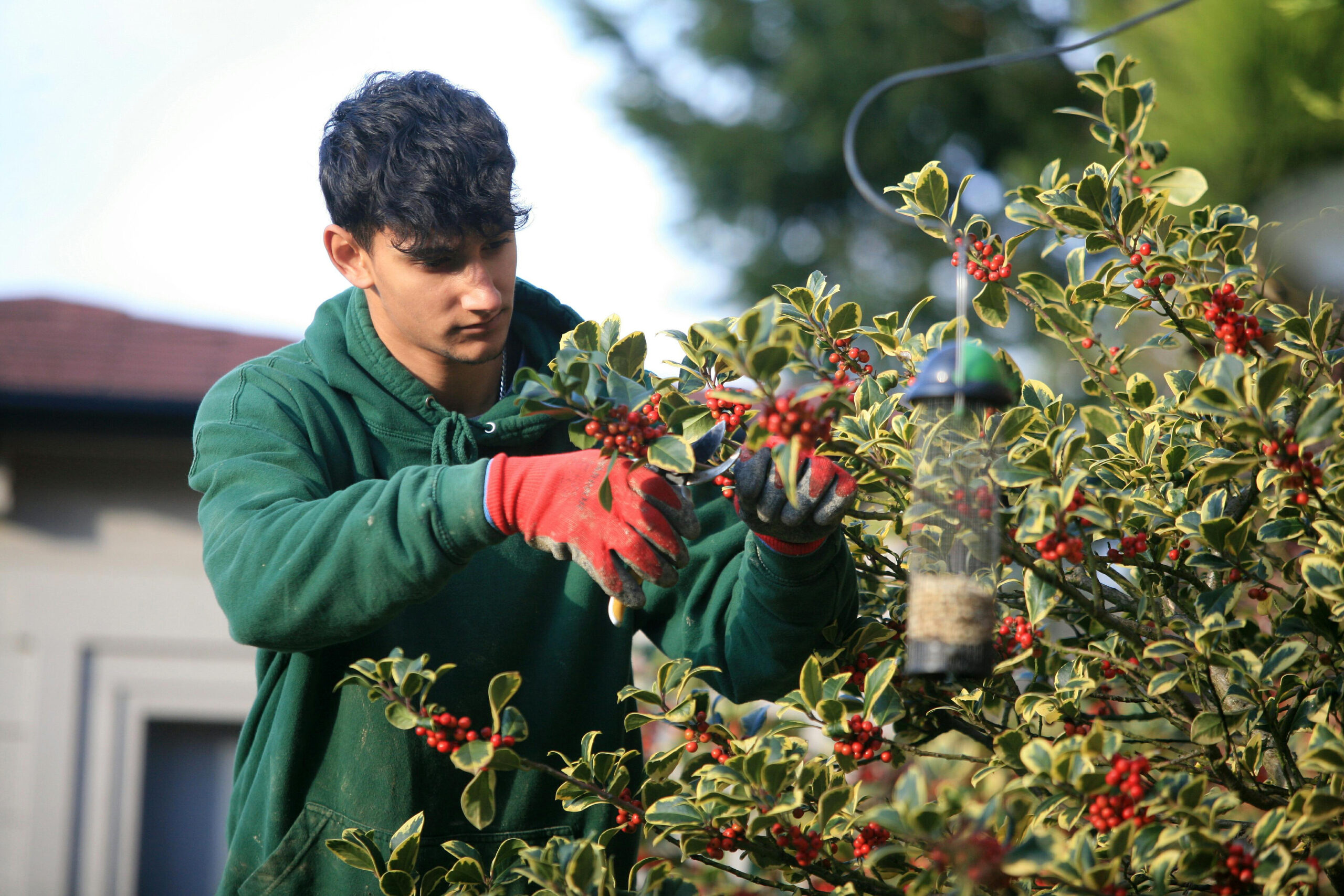
An apprentice with OgrodNick Garden Solutions will be exposed to all aspects of the business.
Working alongside other members of the team you will undertake tasks ranging from:
- garden maintenance
- grounds maintenance
- hedge cutting
- tree work and planting
One of the most important tasks is maintaining and building strong relationships with the clients. Alongside college studies you will be encouraged to develop new skills and increase your plant knowledge.
Training
An apprenticeship includes regular training with a college or other training organisation. At least 20% of your working hours will be spent training or studying.
College or training organisation
REASEHEATH COLLEGE
Your training course
Horticulture or landscape construction operative
Equal to Level 2 (GCSE)
Course contents
- (Core) Apply health and safety processes and procedures including risk assessments and or construction design management (CDM), manual handling, legislative requirements and organisational policies. Follow safe systems of work and safety information in line with employer requirements or site context (for example clearing their route before transporting materials).
- (Core) Apply environmental mitigation measures including storage and disposal of waste, for example sorting materials for recycling or composting, acting in compliance with legal requirements, organisational policies and pollution controls.
- (Core) Select, undertake a pre start check, set up, clean, store and safely operate tools, equipment and machinery (including pedestrian controlled and handheld) in line with current legislation and business policies.
- (Core) Communicate with technical (for example supervisors or managers) and non-technical audiences (for example clients or the public) using language appropriate to the audience.
- (Core) Identify plants commonly grown in the UK by scientific names including genus species and or cultivar.
- (Core) Maintain the correct phytosanitary and bio-security procedures for the site, in accordance with legal requirements.
- (Core) Identify and report symptoms and or signs of commonly found UK plant pests, pathogens and disorders.
- (Core) Maintain plant health for example providing for basic needs such as water, nutrition (either organic or inorganic), light.
- (Core) Cultivate, improve and preserve soils by mechanical methods and or by hand including amelioration and mulching (these might be imported or natural).
- (Core) Clear unwanted vegetation, selecting techniques to be used (for example weeding).
- (Core) Remove unwanted or damaged growth from plants using a pruning cut.
- (Core) Plant shrubs and a tree using a simple tree pit.
- (Core) Install turf for situation.
- (Core) Mow turf using pedestrian controlled powered driven mower.
- (Core) Maintain or protect hard surfaces, features or structures for example painting, re-gravelling, removing weeds from paving, drain clearance, cleaning.
- (Core) Use digital tools and techniques for research, collaboration, continuous professional development and resolution of problems.
- (Landscape construction) Measure and set out an uncomplicated site in preparation for landscape construction activities.
- (Landscape construction) Use free hand cutting and or bench cutting of hard landscape materials using abrasive wheels.
- (Landscape construction) Repair constructed landscape features (simple and noncomplex) for example re-grouting, re-sanding, damaged fencing.
- (Landscape construction) Construct paved feature for example path, patio or shed base. Including setting levels, sub bases, laying bases, finishing.
- (Landscape construction) Construct vertical landscape features including fences, ornamental vertical features, and walls.
- (Landscape construction) Install drainage in landscaping.
- (Landscape construction) Construct horizontal landscape features (excluding paving).
- (Horticulture) Propagate plants by cuttings and seed sowing (this might be indoors or outdoors). Including selection of suitable growing media and or soil.
- (Horticulture) Provide aftercare to recently installed turf and maintain established turf or species rich meadows including irrigation, maintenance, monitoring health and protection from use.
- (Horticulture) Identify if plants are suitable to site, purpose and aesthetics.
- (Horticulture) Maintain soft landscapes for example – staking or support, division, seasonal clearance, and re-planting.
- (Horticulture) Monitor and control plant pests, pathogens, and disorders using basic control methods (including application of chemicals or organic equivalents).
- (Horticulture) Plant herbaceous and seasonal planting (for example bedding, herbs or bulbs).
- (Horticulture) Prune plants to achieve healthy growth and form (including natural habit and formal or trained form).
- (Core) Apply health and safety processes and procedures including risk assessments and or construction design management (CDM), manual handling, legislative requirements and organisational policies. Follow safe systems of work and safety information in line with employer requirements or site context (for example clearing their route before transporting materials).
- (Core) Apply environmental mitigation measures including storage and disposal of waste, for example sorting materials for recycling or composting, acting in compliance with legal requirements, organisational policies and pollution controls.
- (Core) Select, undertake a pre start check, set up, clean, store and safely operate tools, equipment and machinery (including pedestrian controlled and handheld) in line with current legislation and business policies.
- (Core) Communicate with technical (for example supervisors or managers) and non-technical audiences (for example clients or the public) using language appropriate to the audience.
- (Core) Identify plants commonly grown in the UK by scientific names including genus species and or cultivar.
- (Core) Maintain the correct phytosanitary and bio-security procedures for the site, in accordance with legal requirements.
- (Core) Identify and report symptoms and or signs of commonly found UK plant pests, pathogens and disorders.
- (Core) Maintain plant health for example providing for basic needs such as water, nutrition (either organic or inorganic), light.
- (Core) Cultivate, improve and preserve soils by mechanical methods and or by hand including amelioration and mulching (these might be imported or natural).
- (Core) Clear unwanted vegetation, selecting techniques to be used (for example weeding).
- (Core) Remove unwanted or damaged growth from plants using a pruning cut.
- (Core) Plant shrubs and a tree using a simple tree pit.
- (Core) Install turf for situation.
- (Core) Mow turf using pedestrian controlled powered driven mower.
- (Core) Maintain or protect hard surfaces, features or structures for example painting, re-gravelling, removing weeds from paving, drain clearance, cleaning.
- (Core) Use digital tools and techniques for research, collaboration, continuous professional development and resolution of problems.
Your training plan
Requirements
Desired qualifications
- GCSE English, Maths (Grade 4 / C and above) desirable
Let the company know about other relevant qualifications and industry experience you have. They can adjust the apprenticeship to reflect what you already know.
Skills
- Communication skills
- Attention to detail
- Organisation skills
- Customer care skills
- Team working
- Creative
- Physical fitness
Other requirements
Ideally the candidate will have their own suitable transport.
About this company
OgrodNick Garden Solutions offers an ever increasing and diverse portfolio of domestic and commercial clients a dedicated and personable service covering all aspects of garden/grounds maintenance.
After this apprenticeship
Your earnings can increase over time with an apprenticeship. Find out about potential future pay (opens in new tab).
Our business is growing quickly, successful completion of an apprenticeship will offer the opportunity of long-term employment, support and encouragement for further education or maintain strong connections with us on a self-employed basis.